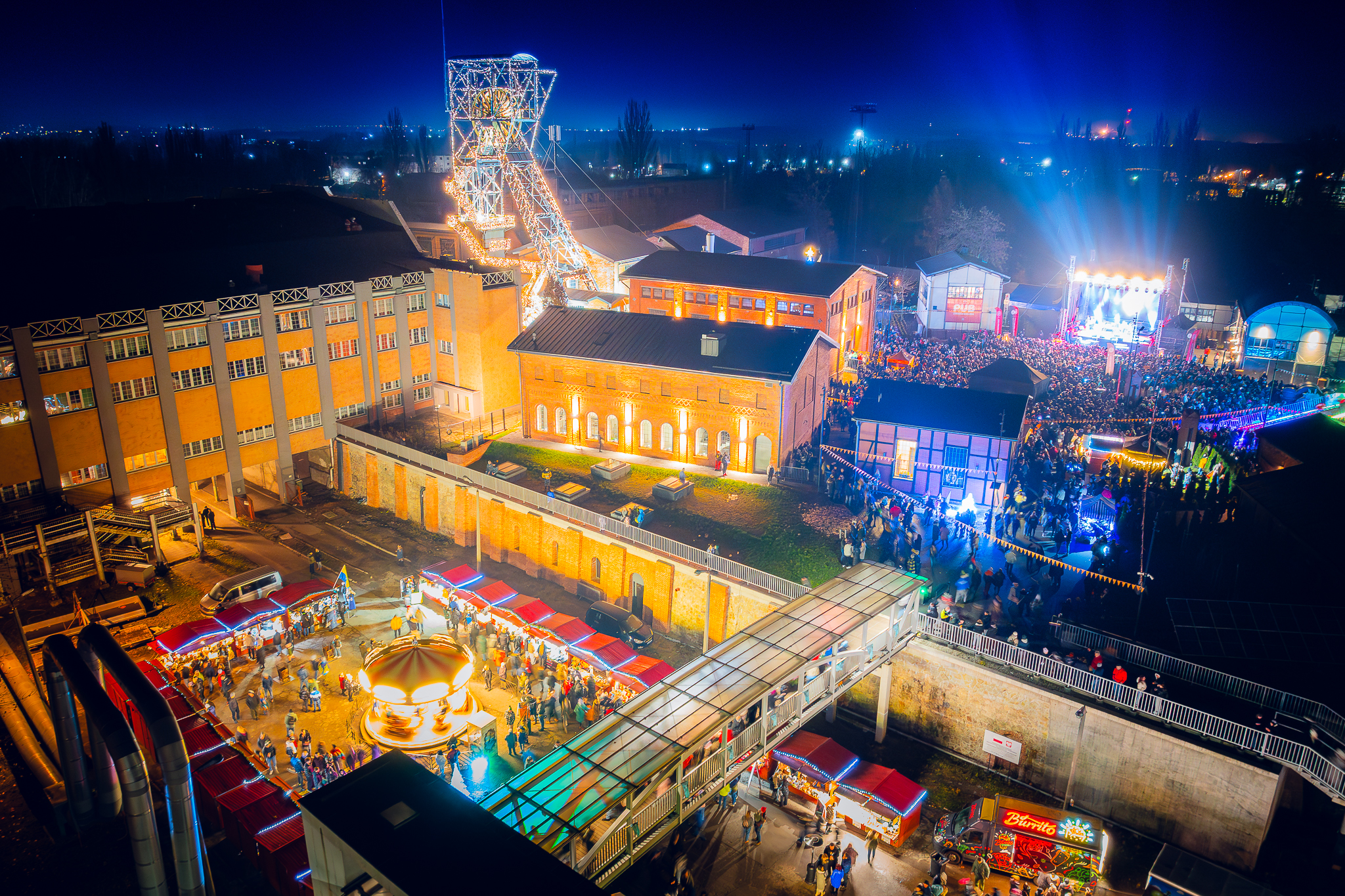
The Coal Mining Museum in Zabrze is one of Europe’s largest tourist facilities dedicated to the coal mining heritage, being at the same time a cultural institution preserving and promoting the mining heritage of the Silesian region in Poland. The Museum is a leader in coal mining heritage tourism throughout Europe with over 10 km of underground tourist routes.
Over the past 15 years, the museum has worked intensively on the revitalisation of the mining complexes: Guido Mine and Queen Louise Adit. It has been an effort unparalleled anywhere in the world. Work on post-mining sites, both underground and on the surface, on this scale is unlikely to happen anywhere else in the near future.
The Coal Mining Museum is actively involved in a process of digitalization, archivisation, and preservation of knowledge about the industry that laid fundaments to the regional community.
With one of the most advanced digitalization laboratories in Europe, all these sites are being laser scanned, recorded with drones, photographed, and scouted for historical documentation to create the most accurate historical artifacts with digital data.
Digitalization of the mines is a core process of preserving the knowledge about the industry that laid the fundament not only for Zabrze but for all the cities of the Silesia Metropolitan area. The 3d visualization of the historical landmarks is a crucial asset in visualizing the future of the transformed area. The Coal Mining Museum is participating in various projects helping to envision the future of the postindustrial sites. They are the responses to the new challenges posed by the growing awareness of industrial heritage conservation.
The main tasks of the our muesum’s Mining Documentation Hub are:
– 2D and 3D digitalization of closed mining facilities – a modern form of documentation;
– Acquisition and conservation of movable tangible heritage – machines, equipment, technical infrastructure;
– Using laser scanning and aerial photogrammetry to document disappearing heritage “in situ”, i.e. where it currently exists.
In 2019, the Museum was awarded the Europa Nostra prize for the revitalization of the Queen Luiza Adit. In 2024 the Museum’s project “A transient legacy – digitalization of the Silesian regional mining heritage” received a prestigious “European Cultural Tourism Network Award”.